
The Evolution of Hip-Hop Production Techniques
April 9, 2024
Introduction
Hip-hop,a cultural movement that originated in the 1970s in the Bronx,New York,has grown to become a global phenomenon.At the heart of this movement is hip-hop music,which has seen significant changes in production techniques over the years.This article explores the evolution of hip-hop production techniques,from its early beginnings to the present day.
The Early Years: Sampling and Drum Machines
The early days of hip-hop were characterized by the use of sampling and drum machines.DJs would manipulate vinyl records on turntables,looping beats and extending instrumental sections to create the foundation for MCs to rap over.The introduction of drum machines like the Roland TR-808 and TR-909 allowed producers to create beats with more precision and control.
The Golden Age: The MPC and Live Instruments
The late 1980s and early 1990s,often referred to as the "Golden Age" of hip-hop,saw the introduction of the Akai MPC (Music Production Center).This sampler and sequencer allowed producers to chop up samples and layer them with live instrumentation,creating rich,textured soundscapes.The use of live instruments,such as pianos and guitars,added a new depth to hip-hop production.
The Digital Revolution: Digital Audio Workstations (DAWs)
The late 1990s and early 2000s brought about a digital revolution in music production.Digital Audio Workstations (DAWs) like Pro Tools and Logic Pro became the standard for music creation.These software programs allowed producers to record,edit,and mix music entirely within a computer,opening up new possibilities for sound design and experimentation.
The Rise of the Trap: 808s and Dark Melodies
The 2000s saw the rise of a subgenre known as "trap," characterized by its use of heavy 808 bass,fast hi-hats,and dark,minor-key melodies.Producers like Lex Luger and Southside of 808 Mafia popularized this sound,which has since become a staple in hip-hop production.
The Present: Collaboration and Global Influences
Today,hip-hop production is more collaborative and globally influenced than ever before.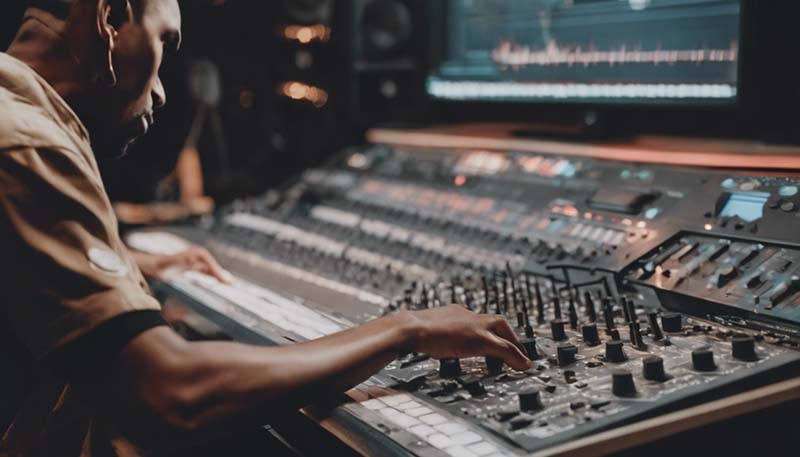 Producers are increasingly using software to simulate the sounds of traditional instruments from around the world,and collaborations between artists from different countries are becoming more common.The use of social media and streaming platforms has also democratized the distribution of music,allowing for a wider range of styles and techniques to emerge.
Conclusion
The evolution of hip-hop production techniques is a testament to the genre's adaptability and creativity.From its humble beginnings in the Bronx to its current status as a global cultural force,hip-hop has consistently pushed the boundaries of what is possible in music production.As technology continues to advance,it will be exciting to see where hip-hop production goes next.

Comment